
Creating Plants by Division
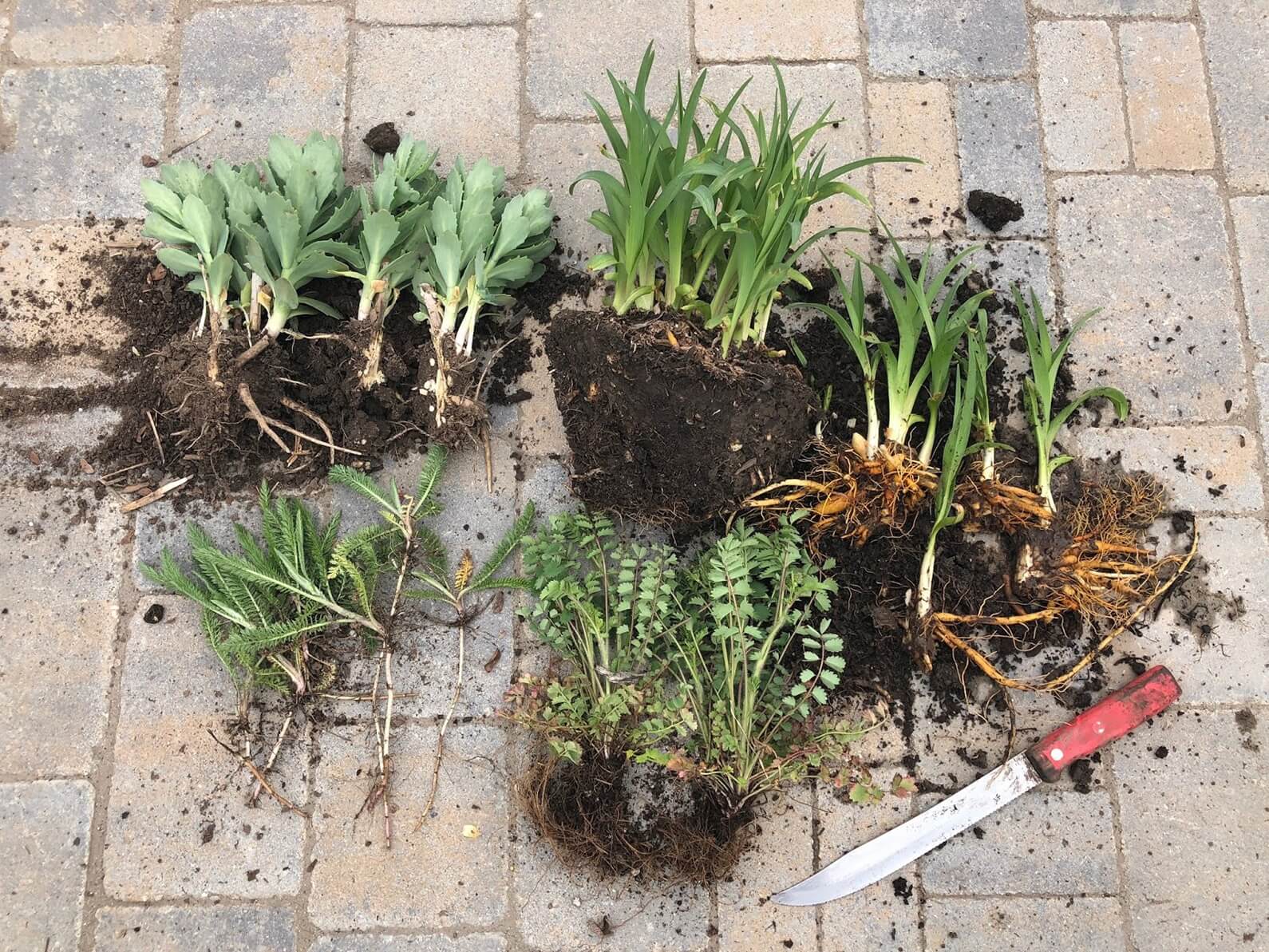
There is usually more than one way to propagate most plant species. An excellent and fairly easy way to propagate many spreading perennials and grasses, once you have a well-established colony, is by division. Plants that increase by tubers, corms, bulbs, rhizomes or runners can also be propagated by division.
Division will also reinvigorate an established plant colony, and help avoid congested conditions that can promote diseases such as powdery mildew. Dividing a colony of plants provides an excellent opportunity to amend and enhance soil conditions, which will enhance new growth and flowering within the colony.
Perennial plants that create colonies from a spreading rootstock, such as asters or yarrow, are easily increased by division; one can simply take out clumps and replant them elsewhere. Finer practices include digging up a large section of the plant and breaking it apart with a garden fork or a hori knife. A spray of water can also be used to remove excess soil and expose the roots and crowns.
Examine the freshly dug clump to clearly see the crowns and any new buds and shoots, and to determine where to separate the clump. If you are planning to pot up your divisions, carefully break the clumps down to a size that will fit into the container you are using. Trim off any damaged or over-sized roots, as well as much of the old foliage or large leaves, but retain all the new growth evident. Always keep more roots than shoots!
Keep your newly potted divisions evenly moist and in a shady spot, gradually moving them into the exposure required by the species.
The best time to divide plants is during the rainy season, usually anytime between October to March. Spring and summer bloomers are best divided in the fall, if possible. Late summer or fall bloomers are best divided in early spring. Plants are good candidates for division when the herbaceous growth has mostly died back, but new shoots and buds are present and protected under this old growth.
Good candidates for fall division include:
Hummingbird sage, yarrow, strawberries, meadow sedge, skullcaps, yerba buena, showy milkweed, and Pacific coast iris
Good candidates for spring division include:
Goldenrod, asters, California fuschia, pearly everlasting, and some of the penstemons